
How to Create a Pitch Deck That Actually Gets Meetings
The pitch deck is the key that unlocks the first meeting. Founders are obsessed with getting this document right. Key Questions Answered: What are the 10-12 "must-have" slides? (Problem, Solution, Market Size, Team, etc.) How do I tell a compelling story, not just list features? Where can I find successful pitch deck examples from companies like Airbnb or Uber? What's the difference between a "teaser" deck (to send via email) and a "presentation" deck (for the meeting)?
Admin
11/4/20252 min read
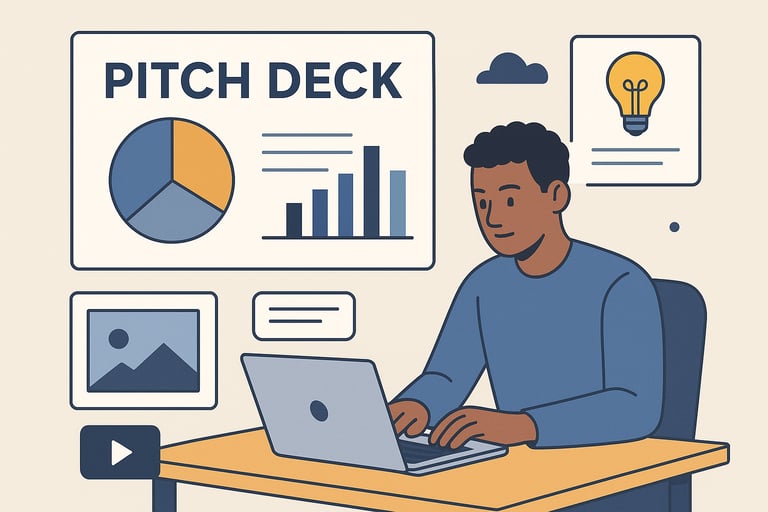
Creating a pitch deck that gets meetings is more about telling a compelling story than just listing facts and features. Here’s how to structure your deck and impress investors—without the need for tables.
The 10-12 Must-Have Slides in a Pitch Deck
Start with a carefully chosen cover slide that features your company name, logo, and a memorable tagline. Open the deck with a clear “Problem” slide—something your audience instantly relates to. Follow it up with your “Solution,” showcasing the unique approach or technology you’ve developed.
Your “Market Size” slide should quantify the opportunity—how big is the market, and why is now the time? Use a “Product” slide to give a succinct demo or description of your core offering. “Traction” provides proof—users, revenue, momentum, and validation. The “Business Model” explains how you’ll earn money. Outline your “Go-to-Market” strategy to show how you’ll find and win customers. Include “Competition” to acknowledge rivals and make clear what sets you apart. Present your “Team” and their credentials, highlight the “Financials” (funding ask, projections), and wrap up with a vision or next-steps slide, painting a bigger picture for your audience.
Tell a Story, Not a List
Move beyond features and facts—lead your audience on a narrative journey. Open with a relatable pain point or user story. Illustrate life before and after your solution. Make each slide a step along the way: the problem builds tension, the solution offers hope, proof points resolve doubts, and your vision brings closure with excitement.
Tie every feature back to value. Don’t just say “AI-powered insights”—show how these insights let retailers boost revenue by predicting trends early. Make your vision tangible by weaving in customer testimonials, growth metrics, or press highlights to bring the story to life. Above all, keep your deck concise and visual—remember, investors spend mere minutes reviewing most pitch decks.
Where to Find Inspiring Pitch Deck Examples
Examples of real pitch decks from companies such as Airbnb and Uber are available on specialized resources:
Slidebean provides over 35 pitch deck examples with insight into what worked.
Visible.vc showcases investor-ready decks from leading startups.
Figma Resource Library contains curated templates and case studies from famous teams.
These resources will help you understand how leading startups have captured investor interest and can serve as practical templates for your own presentation.
Teaser Deck vs. Presentation Deck
Understanding the difference between “teaser” and “presentation” decks is crucial. The teaser deck is what you send cold via email—short, punchy, and self-explanatory, typically around 6-8 slides. It’s designed to get you in the room, not to tell your whole story. Focus on the big vision, the problem, your core solution, and team.
The presentation deck is what you use in a meeting—more detailed, interactive, usually 10-15 slides. Here, you can add nuance and extra proof (like financials or partnerships), respond to investor questions, and adjust your delivery in real-time. The teaser opens doors; the presentation deck seals the deal.
By mastering this structure and always framing your business as a strong, growing story, you’ll maximize the odds of your next deck getting a meeting—and investment.
2025 Ennvest Pvt. Ltd. All rights reserved.

Ennvest is a fundraising platform that helps startups connect with global investors, streamline their capital-raising process, and access expert support for investor outreach and deal execution. It bridges the gap between founders and investors through data-driven insights and personalized fundraising solutions.
Quick Links
Home
About Us
Services
Blog
Contact Us
Legal & Policies
Resources
Consultation
Customer Support
FAQs
Blog